|
|
||||||||||||||||
 |
|
||||||||||||||||
|
From the Editor:
Welcome to the first issue of Hospice Volunteer News!! This publication is provided free to members of the Hospice Volunteer Association.
We hope you will enjoy this quarterly newsletter featuring interviews with hospice volunteers from around the country, tips from volunteer coordinators, a calendar of events and a selection of national news items relating to hospice and volunteerism.
We encourage you to join HVA and welcome your feedback on what you would like to see covered in future issues. GS - Editor
In This Issue:
Volunteer Interview
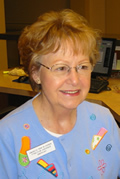
Barb McClarty, long-time hospice volunteer from the Hospice of West Alabama talks about her experience as a hospice volunteer.
VC's Perspective
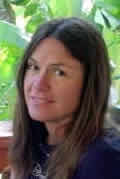
Susan Barber has been a Volunteer Coordinator since 1998 with the Sutter VNA & Hospice in San Mateo, CA. In this issue she discusses her path to hospice and becoming a Volunteer Coordinator.
Become an HVA Member
SPECIAL OFFER - Save on your initial membership dues if you join before 7/30/05.
Resource Links:
|
When did you start as a hospice volunteer? I have been volunteering with hospice since 1997.
How many years have you been a hospice volunteer and what organizations have you volunteered with? My first 5 years were in Tennessee with Hospice of the Highland Rim (HHR) and the last 3 years in Alabama with the Hospice of West Alabama (HWA).
What made you decide to become a hospice volunteer? The nurse who provided hospice care for my husband suggested I would be a good volunteer candidate. I also felt that I wanted others to have the same experience I did when my husband died. My family and I felt so wonderfully supported by the entire hospice team at HHR. Prior to becoming a hospice volunteer I had done volunteer work for the American Cancer Society for 10-12 yrs. My husband and I were members of a co-op of McDonald's owner-operators who started the Ronald McDonald house in Nashville. I volunteered there for a couple of years until they got a good strong volunteer base. I also had experience as a certified nurse’s aid and had taken course work to become an RN.
What are some of the ways you have served others as a hospice volunteer? While at HHR I went to patient’s homes 2-3 times a week serving them in whatever way was most helpful. I tried to schedule my visits on days the nurse or aide would not be there. That gave the caretaker a chance to leave home for a couple of hours or sometimes they just wanted someone to visit and most importantly...someone to just listen to them. When I moved to Alabama and started working as a volunteer with HWA, I did office work. I answered phones, addressed envelopes, anything that needed to be done. Now I work in the impatient unit of our new building, which has 10 bedrooms. My job is to work at the nurse's desk and keep track of everything while the nurses and aides are taking care of patients. I answer phones, take messages, greet visitors and direct them to patient’s rooms. I also make sure there is always coffee in the family kitchen. I am learning something new every day. I love this work.
Queen of England honors hospice volunteers
The work of volunteers in the care and treatment of terminally ill people received royal approval on June 2, 2005 with the announcement that St. Clare Hospice has been given the Queen's award. Hospice still not well understood by public
With our incredible technology, we have been robbed in many ways of the methods human beings have cared for each other for millenniums - especially at that last time, surrounded by family and making that choice of where they want to die.
When HEAL Project Director Greg Schneider first asked me if I’d be interested in contributing to this first issue of Hospice Volunteer News, a newsletter targeted toward hospice volunteers, I was not sure what I would have to say to anyone who had been either volunteering or coordinating hospice volunteers. But I was recently asked by a volunteer who was new to hospice and going through our training, what my background was…how did I ‘become’ a volunteer coordinator?
In part I think she was asking what qualified me to teach volunteers to become compassionate witnesses to the journey of our patients during their dying process while also serving the needs of their loved ones. The question was honest, and sincere. What made me ‘become’ a volunteer coordinator? In the past when asked that question I reassured the questioner by saying,” Well it certainly wasn’t the line I was standing in at career day in college”. Working with the dying and their caregivers was the absolute furthest thought in my mind when picturing the ‘rest of my life’ back in my college days. Like most others raised in the late 50s early 60s, and 70s - death was something that was not spoken of, people who died were ‘resting’ or ‘gone’ and confronting matters about death was to be avoided at all costs.
[Community Service - An Early Path]
I was educated at LeMoyne College, a small Jesuit college in upstate New York. The Jesuits are an order of Catholic priests whose mission is both education and service, so community service was a big part of my education. My first volunteering commitment was with an after-school program for inner city youth in Syracuse, New York. By the time I’d finished my college education, I graduated with the college’s medal for community service. The value of service certainly hadn’t been lost on me and through the connections made by volunteering I landed my first job out of school working with teenagers in group homes.
[AIDS and Other Potential Encounters with Death]
Eventually I made my way out to San Francisco during the early 80s. I arrived at about the same time as what would be known as the Acquired Immune Deficiency Syndrome (AIDS) virus arrived and consequently my education about death and dying and living was not far around the bend. My arrival there also prompted a career change into the catering business, which provided me many opportunities with some of the best caterers in the business. This move unknowingly brought me closer to death and dying because the industry in San Francisco was dominated by gay men. My friendships with the men I worked with deepened. The AIDS crisis was now in full bloom but luckily all of my friends were safe…at least for now.
To my dismay, this was not the case for my softball coach Jeff who had started fainting…an odd thing for a healthy 37 year old man to be doing. He was a robust, young at heart, athletic guy…so none of us were too concerned, until it happened at work and he was rushed by ambulance to the nearest hospital. He eventually ended up at Stanford Hospital after three months of doctor's efforts to definitively diagnose why he was still fainting. He was eventually diagnosed with melanoma in his brain and given 3 months to live.
I did what I had learned from an early age, if someone is sick - stay away. I continued to avoid him at all costs as his illness was now very apparent. I’d see him when he was occasionally able to show up to our softball games, but avoided him whenever I could outside of that…I was as scared as he was. While I knew there were support groups that could help me through this, I chose to avoid them.
[Stephen Levine Teaches Conscious Dying]
During this time my friend Marcel extended an invitation to attend a talk on “Conscious Dying” being given by Stephen Levine. I spent about a week trying to figure out how to politely decline, though in the back of my mind I also saw that lecture as a chance to ‘do something’ and ease the abundant guilt I had been feeling about avoiding Jeff. In the end I decided to go. Jeff had been diagnosed with his brain tumor for over two and a half years by this point and was still alive. I’d seen him maybe less than a dozen times in that period. I thought I’d die of guilt if I didn’t do something for him and soon.
I sat through the two hour talk not understanding a word of it. Stephen Levine spoke about opening one’s heart, about letting things be ‘as they were’, about the possibility of keeping one’s heart open, even while experiencing hell. He talked about softening our belly, and then showed us how in a guided meditation. He talked about his work with people who were dying and as he did so I could feel the hair standing up on my forearms. I wanted to get up and run out of the room. I thought this would be a great time for the “Big One’ to open up the ground beneath us and swallow me up. As I continued to listen I kept hoping the lecture would just end but like Jeff’s dying it seemed to go on and on.
[Friend's HIV Diagnosis Brings Change]
Around this same time one of my best friends, Bill had become very ill at a catering job. Bill's roommate took him to the hospital that night and later Bill called me to tell me that the doctor said he had pneumonia which was now causing him great concern. In those days, pneumonia in a gay man meant just one thing: AIDS. Bill was a friend I spoke with on the phone everyday so the avoidance technique I had used with Jeff wasn’t going to work anymore.
A month later my dearest friend Bob told me he had just been diagnosed with Human Immunodeficiency Virus (HIV), but was going to be OK. I started to cry. I was devastated. I was not going to be OK - it was the late 80s, no one was OK with HIV. Shortly after that conversation I realized I needed help so I started going to support group meetings at the Center for Attitudinal Healing.
[Hiding from Death No Longer an Option]
A month later Jeff took a turn for the worse. There was nowhere to hide now, I had to go see him and confront my fears. Though I’d never seen a person that close to death, I knew Jeff was dying. In spite of his condition, he had expressed to us that he didn’t want to return to the hospital. His family had been planning a visit at the end of the week and were unaware of his recent decline. The three of us who were taking care of him were at a total loss as to what to do. In the end we decided to get him to a hospital anyway and then call his parents to tell them to come as soon as possible as we prayed that if he lived through this he’d forgive us.
The next month was probably the most profound and scary in my life. Jeff now had a good support system in place. His father was there around the clock, while five of us served on shifts. During the early morning hours on one of my shifts I was sitting next to his bed when I experienced the sensation of him ‘leaving’. I could also feel my belly tightening and the fear mounting. Then like a tickertape going through my head the words of Stephen Levine came back to me…“Soften your belly (I did). Take a deep breath (I did). It’s possible to keep your heart open, even in hell (it is).”
As I settled down, so did Jeff. Though not a word was spoken in those few moments, he and I were communicating through our hearts. As my belly softened, so did his breathing, as my internal struggle eased, his external restlessness did too…I was amazed and so incredibly grateful. Finally someone came through the front door, slamming it shut and startling Jeff back into the room, eyes flying open and he said, “I thought I was going to leave”. We just looked at each other and smiled.
[Death Premonition Inspired by Music Proves True]
That evening I attended a concert by my favorite musician, Bruce Springsteen. I sat under the stars at the outdoor venue, grateful to be out of the situation with Jeff, if even for a couple of hours. Bruce started to sing a song about his father and their relationship. I was looking up at the stars, feeling almost transported. As he sang, I began seeing images of Jeff’s father sitting in the kitchen injecting a hypodermic needle into an orange for practice in preparation for having to give Jeff his pain medication. Then appeared images of Jeff’s dad stroking his sweaty forehead, rubbing his arms and speaking with not much more than a whisper to his dying son. Images of love and caring floated up. Images of the sadness in his father's eyes at seeing his son like this.
As Bruce sang about his relationship with his father, Jeff’s relationship with his dad continued to stream by. And in that moment, a voice as clear as any I have ever heard spoken to me said, “You won’t see Jeff alive again, tomorrow he’ll be dead and you don’t need to understand that part, all you need to understand is that it is OK, death is OK, this is the way it is.” I was in tears by then when my roommate turned to me and said “Wasn’t that song incredible?!”. All I could do was nod and know that I didn’t need to understand this now, I just needed to show up with Jeff and trust the process.
I got a call at home around 6:00 the next morning, Jeff had just died. A friend was with him as was his father. I lived the closest to him so I tossed on some clothes and immediately drove over. As I walked into Jeff’s room I saw his body laying there, but Jeff clearly wasn’t. His spirit was gone, to where I didn’t know but I understood now that I didn’t need to know. I’d never seen anyone so newly dead before. I never saw anyone dead who hadn’t been beautified by the mortuary. Jeff had shared the end of his life with me, and now he shared his death with me too.
[Learning Compassionate Care for Conscious Dying]
My friend Bill died two years later, he had full blown dementia by that time and all the conversations we’d had about his dying ended abruptly when the dementia set in. He was no longer able to care for himself. This necessitated that Bill finish his life at Coming Home Hospice. They took incredible care of him. That was my first hospice experience. I thought they were all angels.
I visited him almost everyday and while he was still healthy enough to do so, we did whatever we could to get out and enjoy life. We even went to a weekend workshop with Stephen Levine. I went to every talk Stephen gave that I could get to. As time progressed, I finally began to understand what his teachings were saying.
My best friend Bob continued to deal with the ravages of HIV. He became a soul mate and died in my arms three years later. I lived with him in the hospital for six months on a newly created wing for people with HIV/AIDS. He was their first ‘guest’. It wasn’t hospice, but it was close. He and I talked all the time about his death, his dying process, his frustrations, his angers and his fears. He expressed how amazing it was to have someone to talk with about these things. All the teachings about ‘conscious dying’ began to manifest themselves in the experience he and I shared together. At times the experience seemed horrible, painful and frustrating. The response by people to his illness, even some of his doctors, was demeaning, infuriating and isolating while others responded lovingly, compassionately and their fear was overridden by their love for Bob.
[Moments of Awe]
There were moments that were so beautiful. The nurses, aides and workers on the floor all started taking their breaks in the room Bob and I shared. At this time I was fortunate to be working with Daniel, who was responsible for coordinating Stephen & Ondrea Levine’s workshops locally. He understood when my time at work was superceded by my need to be at the hospital with Bob. Bob and I laughed as often as we cried. He was ‘living’ as often as he was ‘dying’.
The moment of his death was as much a miracle as anything I had ever witnessed. I was holding him at the time and it felt as though he breathed himself out of his body. At that moment I felt a jolt of electricity go through my heart. The hair on the back of my neck stood straight up. My whole body felt like it was being charged.
I’d heard stories of monks receiving ’transmissions’ from their teachers who had died. Up until the moment of Bob’s death I had always imagined that to mean they were being ‘taught’ something. Now I understood that they were also being ‘given’ something, a kind of energy, a kind of love that I had never experienced. This was something else I didn’t need to fully understand but rather was another transformative experience in serving the dying. As human beings we live in a pretty 3D world but when you spend a lot of time with people who are close to death, I’ve come to understand that maybe the universe is really 5D or 10D and we only are perceiving a small portion of it.
[The Hospice Caregiver and Teacher Emerges]
Four more friends of mine had been diagnosed with illnesses, mostly AIDS and cancer at this point. I had now been at the Center for Attitudinal Healing for about three years and was co-facilitating a group for young adults between the ages of 14 and 26 who had life threatening illness. Stephen and Ondrea had asked me to take over producing their San Francisco workshops. We were putting together workshops with people who were dying or who were caring for someone who was gravely ill. I also had the good fortune to visit Elizabeth Kubler Ross at her home in Arizona during this time while she was dealing with her own dying.
In the following year another very dear friend died. Two of my roommates and the people closest to what was left of my heart also died. My grandmother, who had been my mentor and biggest champion in my family, died. Unfortunately my father died at home in 1995 in an unnamed hospice program that was awful. I was sure I’d seen the worst of hospice but I was also grateful that I had experienced some of the best with other loved ones. My dear friend Alina, who was 76 and had told me on my last visit to her in London that I wouldn’t see her again ‘on this plane’, died completely unexpectedly a few months after my visit. I realized that sometimes people know more about their death than others want to hear.
[The VC Opportunity Presents Itself Unexpectedly]
Death had personally presented itself in so many ways to me so early in my life and I wanted to be done with it. I prayed for this ‘phase’ of my life to be over and eventually my friends stopped dying. Stephen and Ondrea stopped going out on the road to teach and I was soon out of work as a result. While I had enough death in my personal life, I was still interested in hospice and staying in touch with the catering business.
One day I saw an ad for a special events coordinator for a local hospice program. I sent in my resume and got a call back about a week later from someone in a completely different office asking me to come in for an interview as a volunteer coordinator. While I had no experience as such, I was hired as Volunteer Coordinator in 1998 by what was then Visiting Nurse and Hospice of Northern California. The opening was in their San Mateo county office. The organization is now called Sutter VNA & Hospice.
[Life as a Volunteer Coordinator]
I’ve been at Sutter VNA & Hospice over eight and a half years. The most rewarding challenge as a Volunteer Coordinator is finding individuals who as volunteers are willing to just show up every week at a total stranger's home and assist them and their family in what is definitely one of the most difficult times for a family. Being able to do such work and being OK with the ‘not knowing’ that often presents itself reaffirms my faith in humanity every time it happens. As a culture we spend almost every waking moment denying death in whatever way possible. To work with volunteers who can compassionately support those who ARE dealing with death on a daily basis is something that I don’t have words to express my gratitude for.
A volunteer shows up because they are not afraid of what is happening, or if they are afraid - they are willing to step into the fray, to let go of what they ‘know’ and be open to what they don’t. Who could ask for a bigger blessing than that, in death, or in life?
When I introduce myself to a new group of volunteers in their training session I tell them that the reason I am there is to continue a legacy that has been passed down to me through the deaths of my friends and the wisdom and compassion of my teachers, especially Stephen and Ondrea Levine. Most significantly all my friends who have died taught me that love really is stronger than death, that relationships continue after one’s body is finished and that it truly is possible to keep one’s heart open to love and to life in even the most hellish situations. They too shall pass, but love doesn’t.
The part of my job that I love the most is the training. Training a new group of volunteers is like tossing a pebble in a still pond, the ripple effects go on and on. The volunteers I have had the privilege to train and to assign to patients keep these perspectives fresh on a daily basis. They have become part of the legacy of life and death. Volunteers are truly the heart and soul of hospice. Most families can figure out why a nurse, social worker or home health aide would need to be involved in their dying loved one's care. Yet when a volunteer shows up at their home just because they care, it normalizes the experience that person is having around their death in an unspoken way that almost nothing else can.
NOTE TO VOLUNTEER COORDINATORS AND MANAGERS: If you manage hospice volunteers and would like to be considered as a contributor to VC's Perspective for a future issue of Hospice Volunteer News, send an e-mail to HVA.
Did you have any fears when you first started? I really had no fears of working with the dying when I first started as a volunteer since I had worked at a hospital and in a nursing home before becoming a hospice volunteer.
Has your perspective on the fears and challenges that face you as a hospice volunteer changed over the years? The only thing that has changed is that I have learned how important volunteers can be. I used to say that I was "only" a volunteer. At first I didn't know what kind of reception I would get when I started going to patient’s homes. However, I always got a warm welcome and the families soon realized I was also a part of the hospice team. This was a beneficial realization for me as well because I could focus on the family’s needs instead of my own concerns about my value to them.
What has been the most challenging aspect of being a hospice volunteer? The most challenging part is that I am always looking for more information and training to make me a better hospice volunteer.
What type of training did you receive as a new volunteer? I had my first training at HHR in Tennessee. The training consisted of six sessions, four hours each. We met with social workers, the chaplains, the doctors and nurses. We learned how important they all were to the team. Most of the training was done by RN’s. They taught us how to handle patients. We learned how to move them in bed, help them into a wheelchair or bedside commode. We were instructed how to do the work without hurting the patient or ourselves. We learned about infectious diseases and protecting ourselves. We learned the art of conversation with a patient and their family. What do you say or not say? And as always...listen!
Have you continued to partake in continuing education relating to hospice? If so, what types of ongoing training are you receiving through your hospice or from other sources? The wonderful nurses and aides are constantly giving me on the job training so I can do my job better. I attended an all day seminar on hospice at a local college while with HHR, which was very informative.
What would you like to see HVA bring to the hospice volunteer community? I would like to see an education program that can cover the basics for the new volunteer to more advanced topics for the experienced volunteer, who can always benefit from more training. I would like to see more continuing education opportunities for volunteers. One of the things I am currently learning so much about is communicating with family members when their loved one is dying. For example, at our hospice the nurses show so much compassion and always know exactly the right thing to say, I am trying to learn by their example. Our nurses have a ritual and a little service for family members. After the patient dies, the nurse and family members go to the chapel where they light a candle and pray. The nurse reads a very short service. The chaplains do this service if they are available.
To conclude, do you have any personal thoughts you would like to share with other volunteers regarding your experiences as a volunteer or perspectives on hospice? Personally I feel so blessed to be part of the hospice team. I have received so much more than I have given to others. We need to spread the word about hospice. There are so many misconceptions held by the general public. The Terri Schiavo situation certainly illustrated this quite well. I think the HEAL Project is moving in the right direction with its public education programs, which will help dispel some of these misconceptions. I would also like to encourage others to volunteer. People are needed to take care of patient’s pets, clean their house, go to the grocery store, take care of a flower bed or cut the grass, write letters for patients, or bake a casserole for the family. I suggest that people start out slow in their volunteer work. I have seen them take on too many tasks in their new enthusiasm and then burn-out and quit. Learn one thing at a time.
I wanted to share two experiences that stand out for me. Many times as a hospice volunteer I have seen families with deep religious faith make the passing of a loved one a most touching and meaningful experience. My first experience in this regard was with my own husband before I became a volunteer. While he was under hospice care he needed very little medication for his illness so he was alert and very aware right up until the moment of death. One week before he died I had walked out of the bedroom for a few minutes. When I returned, he was sitting up in bed smiling and announced that the angels were there. He said they were tall. I asked if all of them were tall and watched his eyes as they appeared to be glancing from the floor up toward the ceiling at the angels in a semi-circle around his bed. He said they were all tall. There is more to the story, but he took most of the secrets with him. I would ask him more questions about the experience but he just kept smiling that knowing smile and kept the details to himself. He was so at peace. Thanks to a wonderful hospice nurse, Betty Bramblett, and the entire team at hospice, my husband died at home in his own bed surrounded by his family. That is what hospice is all about: the patient and their family.
Another such example was when I took care of a lady 3 days a week for several weeks. I would bathe her and change her bed on days the nurses or aides were not there. I heard great stories about her travels, her family both good and bad. Her grandson would come and play hymns on an antique pump organ for her. One day she asked me about death. I asked her what she thought about it. She smiled and said that she always felt that heaven was her real home and she was just going home. She died very peacefully. I have very fond memories of her.
NOTE TO VOLUNTEERS: If you are a hospice volunteer or have acted as the primary caregiver for a family member or friend and would like to be considered for an interview for a future issue of Hospice Volunteer News, send an e-mail to HVA.
10-bed hospice will be a first of its kind in Ontario
Hospice staff have been quietly approaching local businesses to help raise the $4.2 million required to build the 13,940 square-foot hospice. Hospice supporter Iris Berryman donated the 1.25 acres of vacant land. One million dollars will be set aside as an endowment for future operational expenses. Canadian Health Care Crisis Looms
"Still Not There - Quality End of Life Care: A Progress Report," a report that once again highlights the looming crisis in ensuring that every Canadian is able to die with dignity, free of pain, surrounded by their loved ones, in the setting of their choice. State, feds putting huge cost squeeze on hospice homecare agencies
New Hampshire home-care agencies lost more than $5.5 million in Medicaid reimbursements last year and have not received any adjustment in the state reimbursement rate since 1999. Hospices Take on Bigger Role in American Death
Hospice care programs have increased from 1,200 in 1992 to 3,300 in 2003 and have become an accepted part of health care now covered by Medicare, Medicaid and most private insurers. Hospice Founder injects HIV to save others
Belfast priest Father Kieran Creagh has set up Leratong hospice in a poverty stricken South African township. He tells Judith Cole how he has gone to extraordinary lengths to fights AIDs. [Advanced Directives]
Many Still Seek One Final Say on Ending Life
Interest in living wills - the documents that let people specify what medical measures they want or do not want at the end of life - has surged in the aftermath of the fierce nationwide battle over the fate of Terri Schiavo, lawyers and other experts on all sides of the issue say. [Alternative Therapies]
Healing art of reiki hailed as a stress and pain reliever
After one hour-long session where the woman softly placed her hands on different parts of Levine's body, Levine said she slept restfully for the first time in three months. And when she woke up the next morning, the swelling in her hands was gone and her rashes had disappeared. Vet students care, comfort families with dying pets
The program is similar to a human hospice program and is designed to help families with the end of their pet's life. The ultimate goal of the program is "to help families take care of their terminally-ill pets and let the pet die peacefully at home." Horticultural therapy benefits many
Horticultural Therapy or HT is really a very old concept. People have found solace in nature from almost the beginning of time. The first recorded use of horticulture as a treatment occurred in Egypt when court physicians prescribed walks in the palace gardens for royalty who were mentally disturbed. Therapy dogs provide special comfort to hospice patients
Emma is a very good therapist. Her gentle brown eyes immediately put her clients at ease. She's a wonderful listener - never judging and never interrupting. When she walks into a room, problems just seem to disappear. [Bereavement]
Camp for Kids Who Have Lost Someone
Mike Moonis created a camp for kids who have lost someone close to them to help them heal together. Mikey's Camp is an annual weekend-long event for grieving children sponsored by Kidz'NGrief and Bon Secours Hospice. [Ethics]
Complexity of end-of-life ethics decisions
Dr. Robert Orr expected that some people attending a Dallas bioethics conference might chuck rotten tomatoes at him over his view that end-of-life decisions aren’t always as morally clear as some believe. Matters of Life and Death - How to explain the unfixable
"We are constantly being asked to see families struggling with serious illness; to help make them physically comfortable so they can think straight; and then be able to talk with them about about the big picture of their disease, and what options there are for them, and help them navigate through the systems and the choices." [Nursing]
Nursing In The Presence Of Death
To be in the presence of Joan Thorburn is to be in the presence of confidence, compassion, and serenity. Yet her mood is far from somber, as her co-workers at Regional Hospice of Western CT in Danbury will attest. [Pet Hospice]
Group forms to support owners of dying pets
Lou Leet, a Marin grief recovery specialist, has founded BitterSweet, a San Rafael-based nonprofit organization designed to help pet owners with dying animals. The nonprofit will hold its first meeting Sunday to recruit volunteers who will be trained in both animal hospice - managing palliative care for terminally ill animals - and providing support for grieving pet owners. [Rituals in Dying]
Volunteers joining Jewish burial societies
“The American funeral industry has not responded consistently well to the ritual needs of American Jews in many ways...What we have done as a Jewish community is take a ritual that we as a community used to be in control of and hand it over to outside professionals,” Rabbi Linda Holtzman said. “Doing taharas seems to be a way of reclaiming the community’s responsibility and role in taking care of someone, not just throughout his or her life but after death as well.” July 6-11, 2005 IONS International Conference - CONSCIOUSNESS & HEALING
Arlington, Virginia Scientists and spiritual leaders are joining forces to create a new roadmap for social transformation. This roadmap affirms the importance of an inner revolution in consciousness as the primary driver of change, resulting in social and global shifts towards a sustainable, conscious, and whole way of life. More than 70 luminaries, including Edgar Mitchell and Deepak Chopra, will present a vision of profound hope, grounded in rigorous science, wisdom, and compassion. Emmy award-winning musician Gary Malkin, producer of Graceful Passages, weaves music, poetry, and song into the program. August 1-3, 2005 1st National Conference on Access to Hospice and Palliative Care
St. Louis, Missouri This conference will focus on the barriers, concerns and innovative programs concerning access to hospice and palliative care from a variety of perspectives: (1) What are ways to increase access to underserved populations? (2) What strategies are needed to survive in an increasingly competitive environment? (3) How can we break down internal barriers and overcome external barriers to increase timely access to care and services? September 30 - October 2, 2005 GHPCO Volunteer Symposium
Epworth by the Sea, St. Simons Island, Georgia This Volunteer Symposium is designed for hospice and palliative care volunteer managers and volunteers. We will offer solutions to the challenges facing hospice and end-of-life care issues for volunteers and volunteer managers in today's ever-changing health care environment. October 22-23, 2005 Grace In Dying: Spiritual Practices In Accompanying The Dying
New York Open Center, NY, NY This workshop by Frank Ostaseski of the Alaya Institute is open to all and may be of particular interest to professionals or those who anticipate caring for family members or friends facing life threatening illness. November 9-13, 2005 Cultivating Presence Residential Retreat
Santa Sabina Center, San Rafael, CA This unique five-day residential training retreat by Frank Ostaseski of the Alaya Institute is designed for professionals or caregivers interested in restoring the soul to caregiving. SPECIAL OFFER FOR VOLUNTEERS: join HVA before July 30, 2005 and you will get 20% off your $40 membership dues for the first year, receive a FREE pass to take an introductory HVTI online course and a bonus gift!!
SPECIAL OFFER FOR HOSPICES: Group rates are available for your volunteers. Welcome your new volunteers to your organization by offering them a complimentary HVA membership upon completion of their training!! Contact us by e-mail or at (866) 489-HEAL (4325) for more information on rates.
[About HVA]
The Hospice Volunteer Association (HVA) was founded in January 2005 by the HEAL Project as an adjunct to its Hospice Volunteer Training Institute (HVTI). An estimated 500,000 people volunteer in the nation's 3,200 hospice organizations annually, providing more than ten million hours of service each year. The HEAL Project is sponsoring HVA for the purpose of creating a world-wide hospice volunteer community where volunteers can support and serve each other primarily through continuing education opportunities.
[HVA's Mission]
Our mission is:
[Membership Benefits]
Membership in HVA will entitle volunteers and hospice organizations to the following benefits:
|
||||||||||||||||
|
© copyright 2005 HEAL Project. All rights reserved |